

Gender, Victimization, and Victim Services Needs among Community Court Defendants
Date Published
2019
Agencies
OVC-Sponsored

Official websites use .gov
A .gov website belongs to an official government organization in the United States.
Secure .gov websites use HTTPS
A lock (
) or https:// means you’ve safely connected to the .gov website. Share sensitive information only on official, secure websites.


According to the National Crime Victimization Survey, only 12 percent of victims of serious violence ever receive help from a victim services agency. This already-low number drops to 4 percent when the crime is not reported, which is the case for approximately 50 percent of violent crimes. To improve this reality, the victim services field must diversify and expand existing strategies for providing...
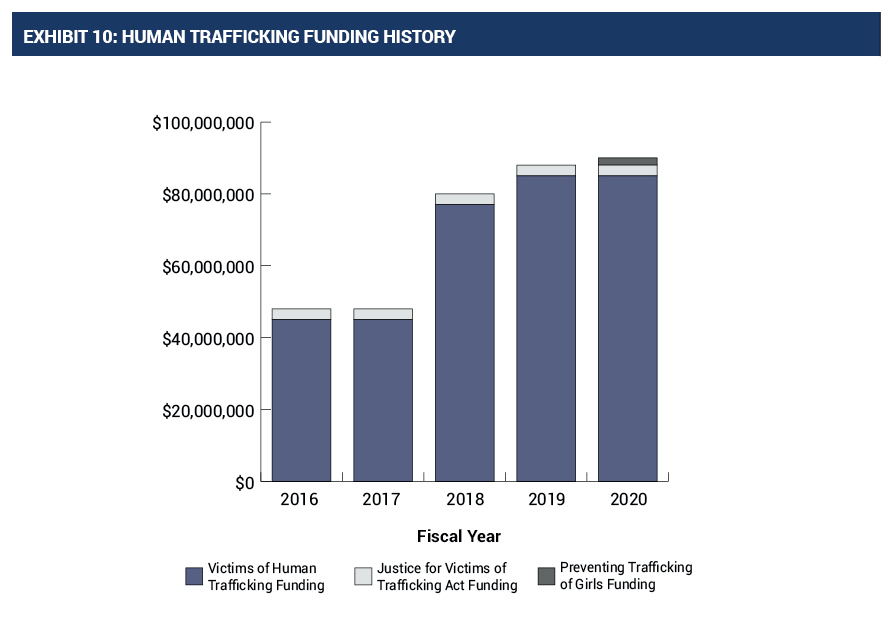
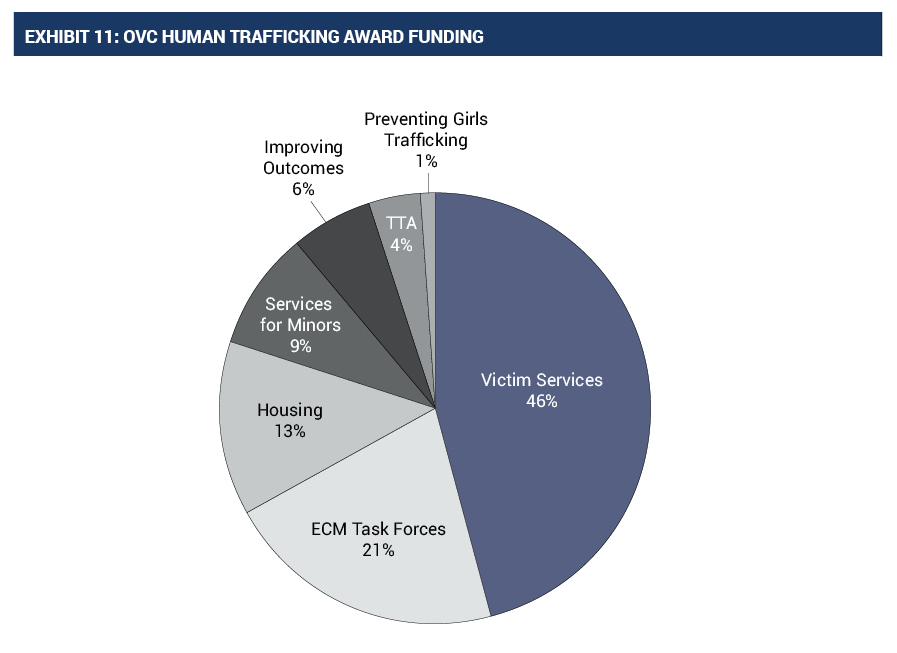
With funding appropriated through the Victims of Trafficking and Violence Protection Act, OVC administers the largest amount of federal funding dedicated to responding to human trafficking in the United States.
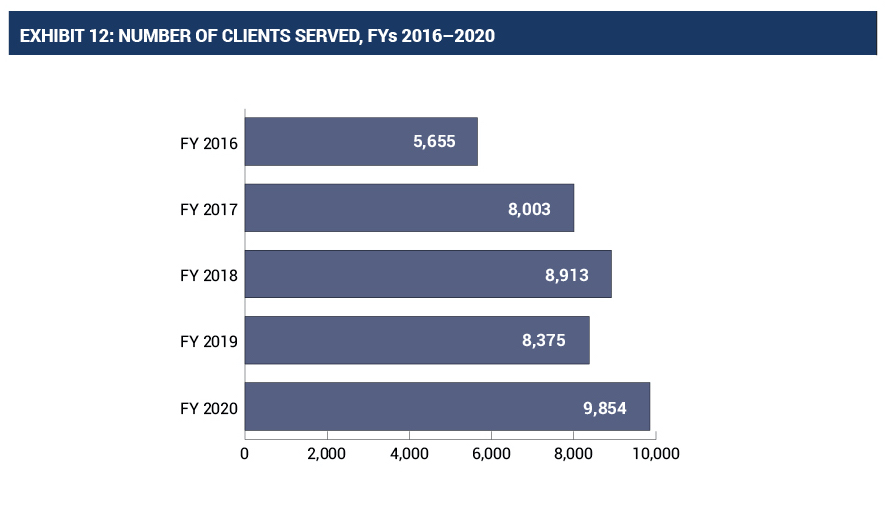
OVC funding supports the delivery of direct services such as case management, housing, legal assistance, and multidisciplinary collaboration and state-level approaches to identifying and serving victims of human trafficking. In addition...
The Office for Victims of Crime (OVC) is pleased to present this report of activities during fiscal years (FY) 2017 and 2018. Every year, OVC supports millions of victims of crime as they heal from their victimization and rebuild their lives. The core of this support is the Crime Victims Fund (the Fund), which is financed by fines, bond forfeitures, and penalties stemming from...
In April 2020, OVC sponsored the annual commemoration of National Crime Victims’ Rights Week (NCVRW). The theme—Seek Justice. Ensure Victims’ Rights. Inspire Hope—recognized that education on crime victims’ rights is key to ensuring that all participants in the criminal justice process acknowledge and support those rights. The theme also invited us to celebrate the individuals and...
OVC believes that crime victims should have access to the evidence-based services and support they need to begin their physical, emotional, and financial recovery. However, OVC recognizes that there are serious challenges to achieving this goal. Strengthening connections across allied fields to expand the availability and quality of services that impact a victim’s healing are among these challenges.
According to the National Crime Victimization Survey, only 8 percent of victims of violent crimes received help from a victim service agency in 2019—a decline of 11 percent from 2018. To improve this reality, the victim services field must diversify and expand existing strategies for providing victim assistance and create vital links to other fields that come into contact with victims of crime...
In FYs 2019 and 2020, OVC funded two partner agencies—the National Institute of Justice (NIJ) and the Bureau of Justice Statistics (BJS)—in their endeavors to generate, collect, and analyze quantitative and qualitative data on victimization, victim services, and related topics critical to the field.
OVC continued an interagency agreement with NIJ to support research for the field, including...
OVC encourages service providers and allied professionals to strengthen their knowledge, skills, and abilities so that they can provide the best possible services to crime victims throughout the Nation. The OVC Training and Technical Assistance Center (OVC TTAC) leads the agency’s efforts to provide such expertise- and capacity-building activities by offering a variety of instructor-led trainings, both in person and online...
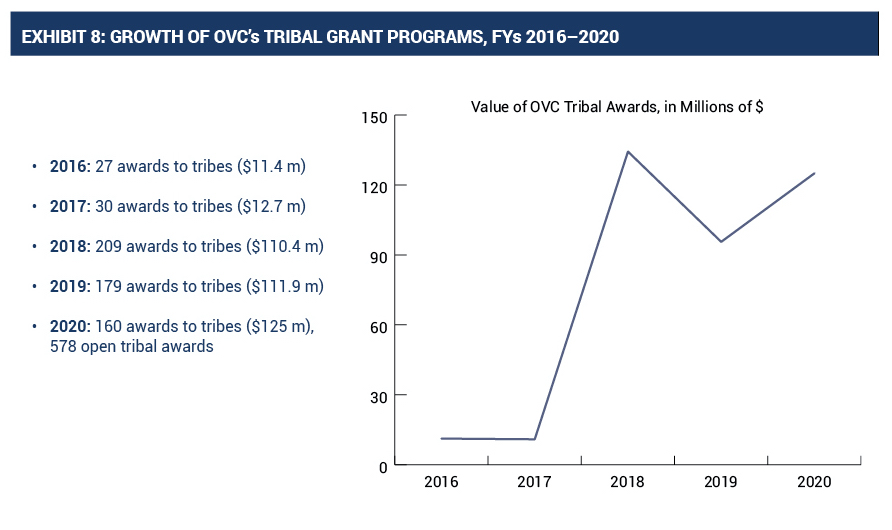
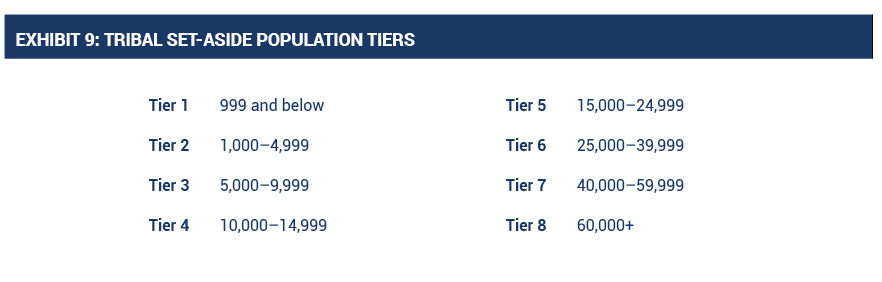
American Indians and Alaska Natives (AI/AN) suffer from one of the highest rates of victimization in the country. Cultural differences, remote locations, and challenging jurisdictional issues make providing victim services in tribal communities complex. In its work with tribes, OVC pays particular attention to government-to-government relationships with our tribal government grantees and to supporting tribes in providing culturally appropriate services for victims.
According to the Centers for Disease Control and Prevention Adverse Childhood Experiences Study, parental substance abuse is one adverse childhood experience associated with a range of negative outcomes later in life. Children and youth who are exposed to parental substance abuse may be at greater risk for crime victimization during their lifetimes, including child abuse and neglect, human trafficking, intimate...
Older adults are especially vulnerable to violent crime, neglect, and exploitation, including financial fraud. The effects of these crimes can be devastating, and older adults may be targeted at rates that outpace the services available to help the growing number of victims. Not surprisingly, elder abuse results in a wide range of negative health impacts, including the increased likelihood of...
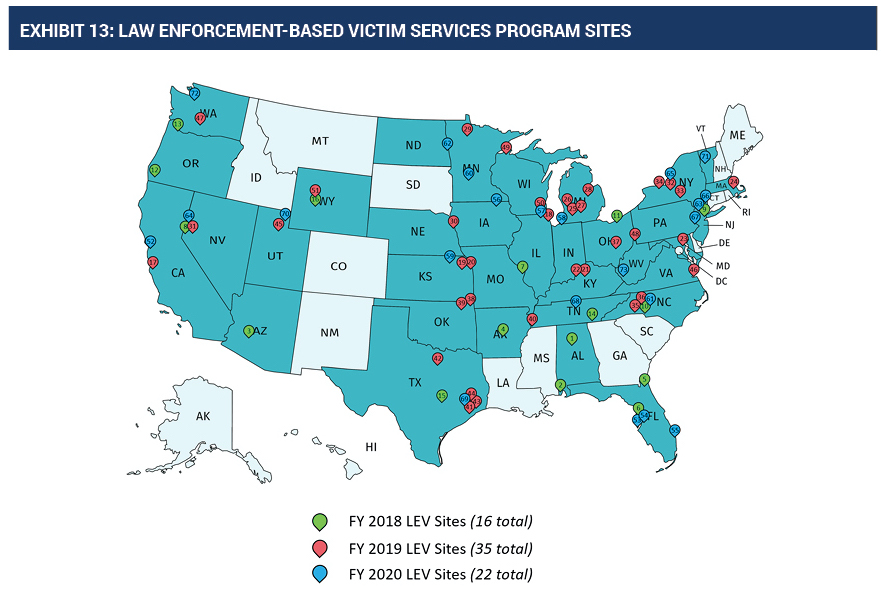
OVC supports partnerships with law enforcement agencies at the state, tribal, and local levels to combat crime, promote safer neighborhoods, and establish collaborations between police and the communities they protect. Through discretionary grant programs, OVC grantees help agencies provide effective, trauma-informed law enforcement practices to better serve all victims. OVC also funds national-scope discretionary programs to provide comprehensive services to victims...
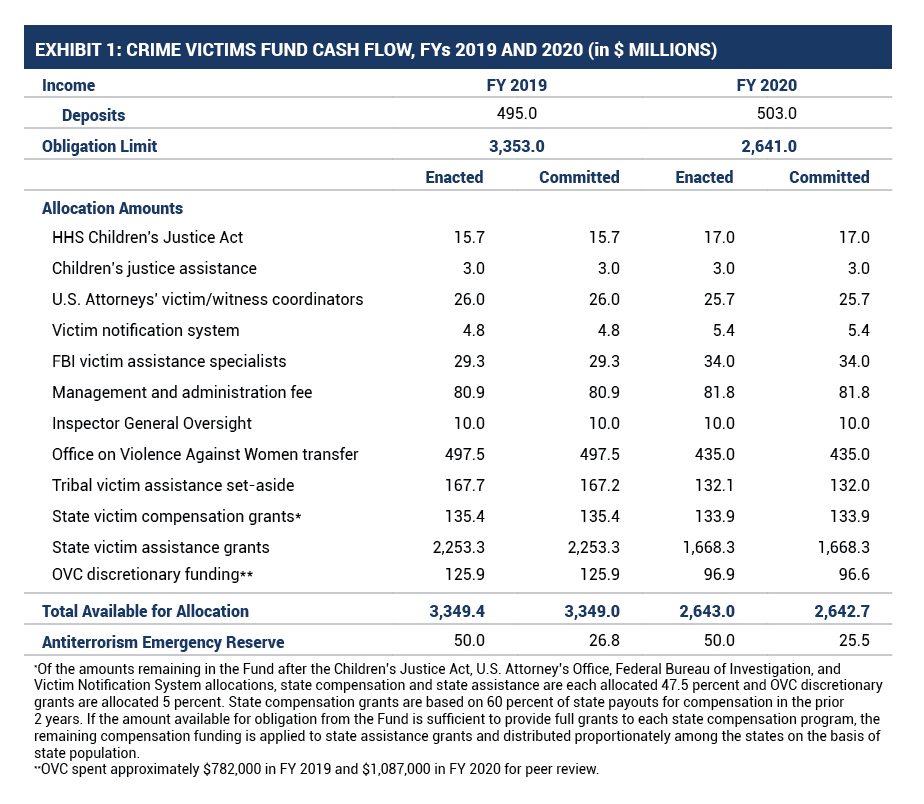
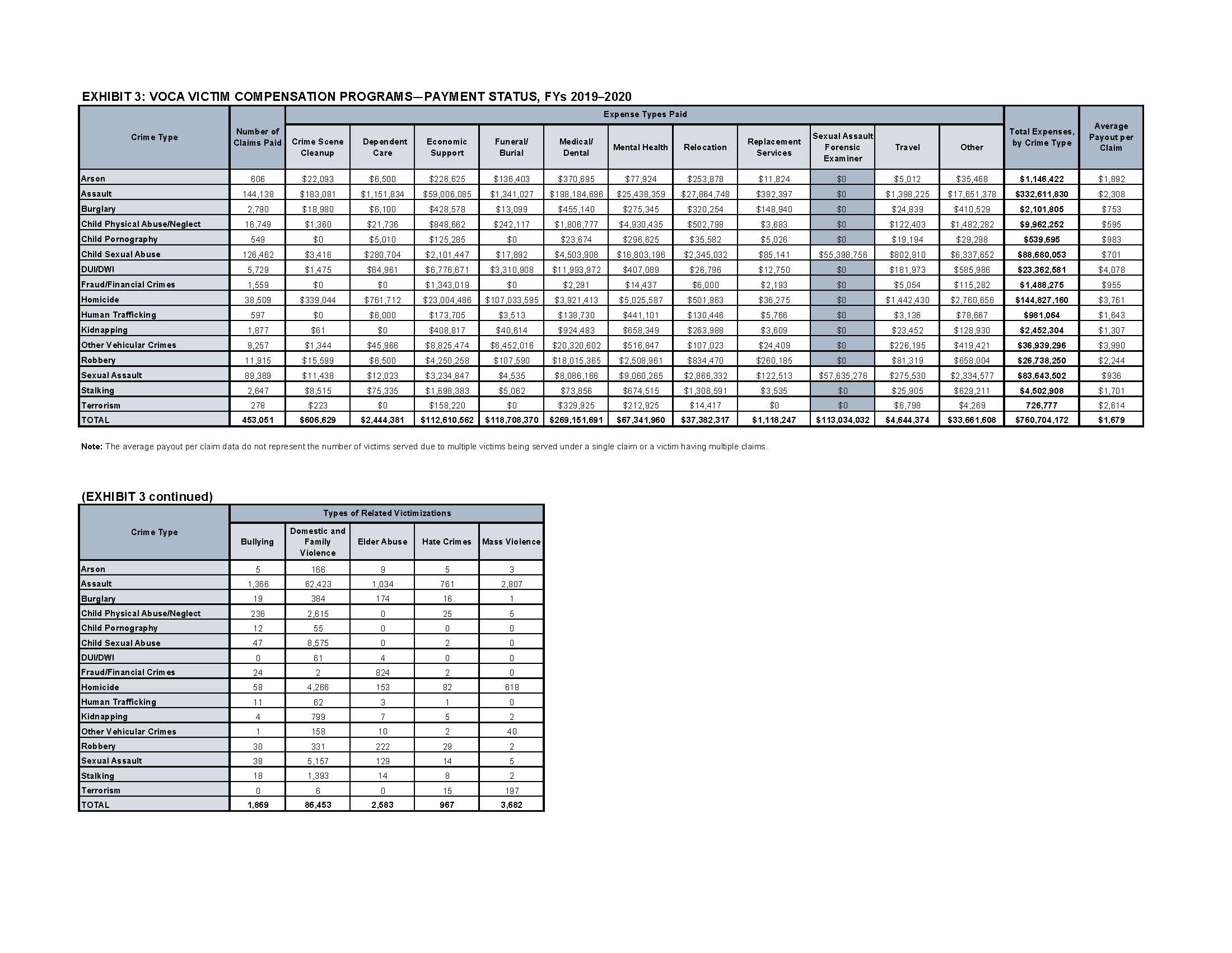
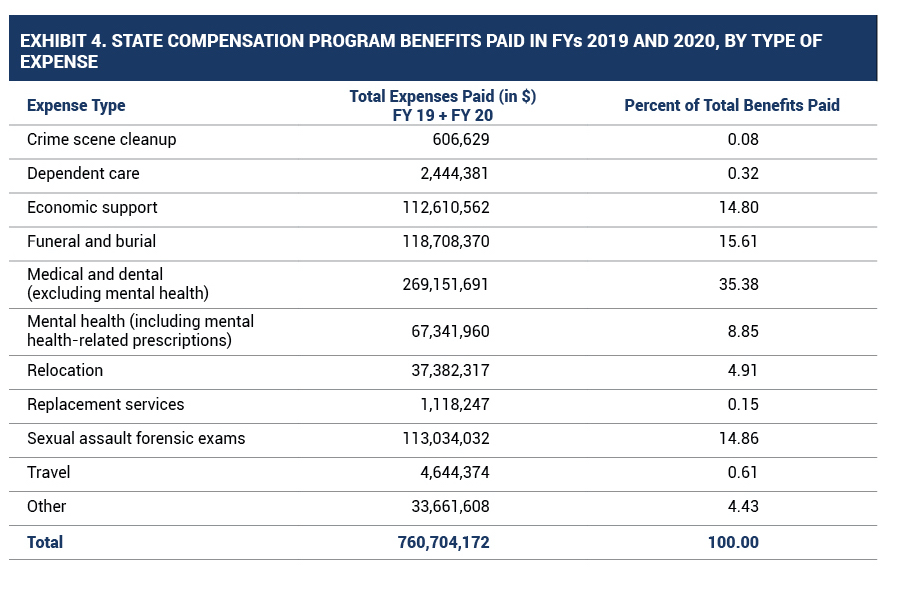
OVC’s VOCA Compensation Formula Grant Program reimburses victims for financial losses resulting from their victimization. OVC disburses these funds to supplement state programs that provide financial assistance and reimbursement to victims for crime-related expenses, including medical and dental care, counseling, funeral and burial expenses, and lost wages. Compensation programs may also reimburse victims for other types of expenses related to their victimization...
OVC administers two Victims of Crime Act (VOCA) formula grant programs that support crime victim compensation and assistance—the foundation of support for victims throughout the Nation. These formula grants account for approximately 95 percent of the VOCA funds that OVC disburses each year.
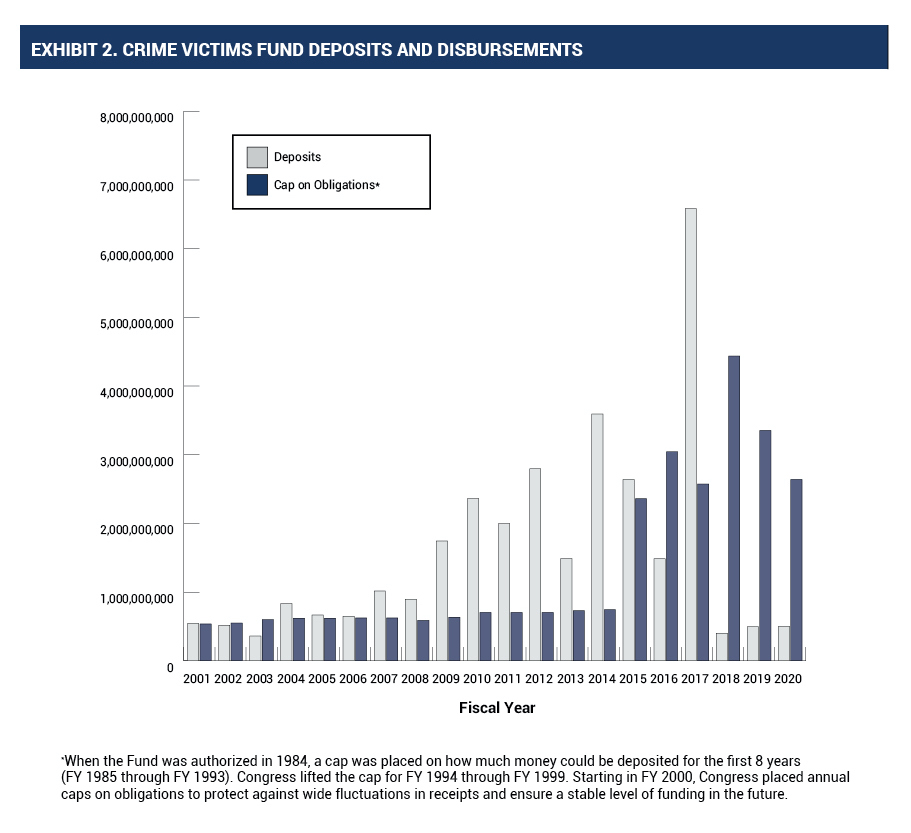
The Crime Victims Fund (the Fund), established by the Victims of Crime Act of 1984, supports services for victims of crime throughout the Nation. OVC is charged by Congress with administering the Fund, which is composed primarily of fines, special assessments, and bond forfeitures from convicted federal offenders, making it a self-sufficient source of compensation and assistance that does not rely...
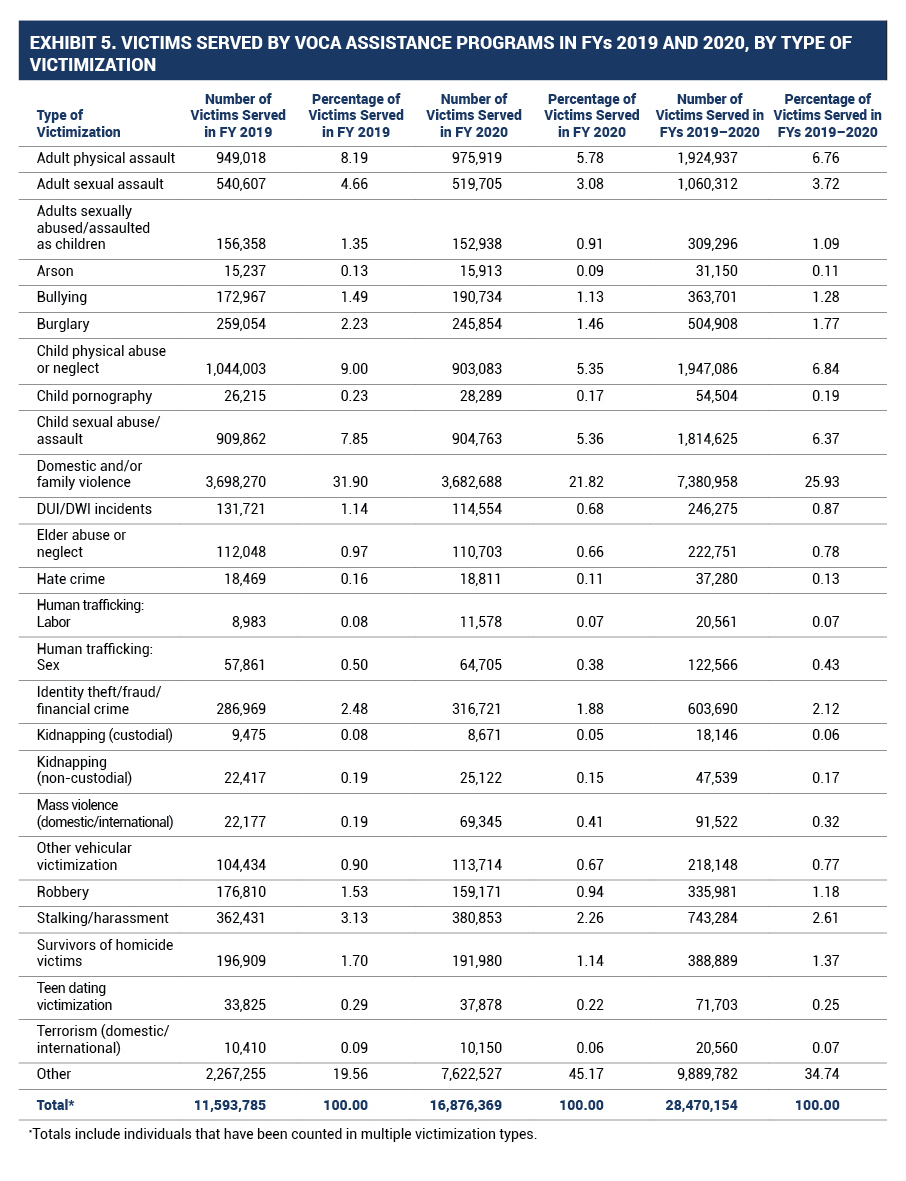
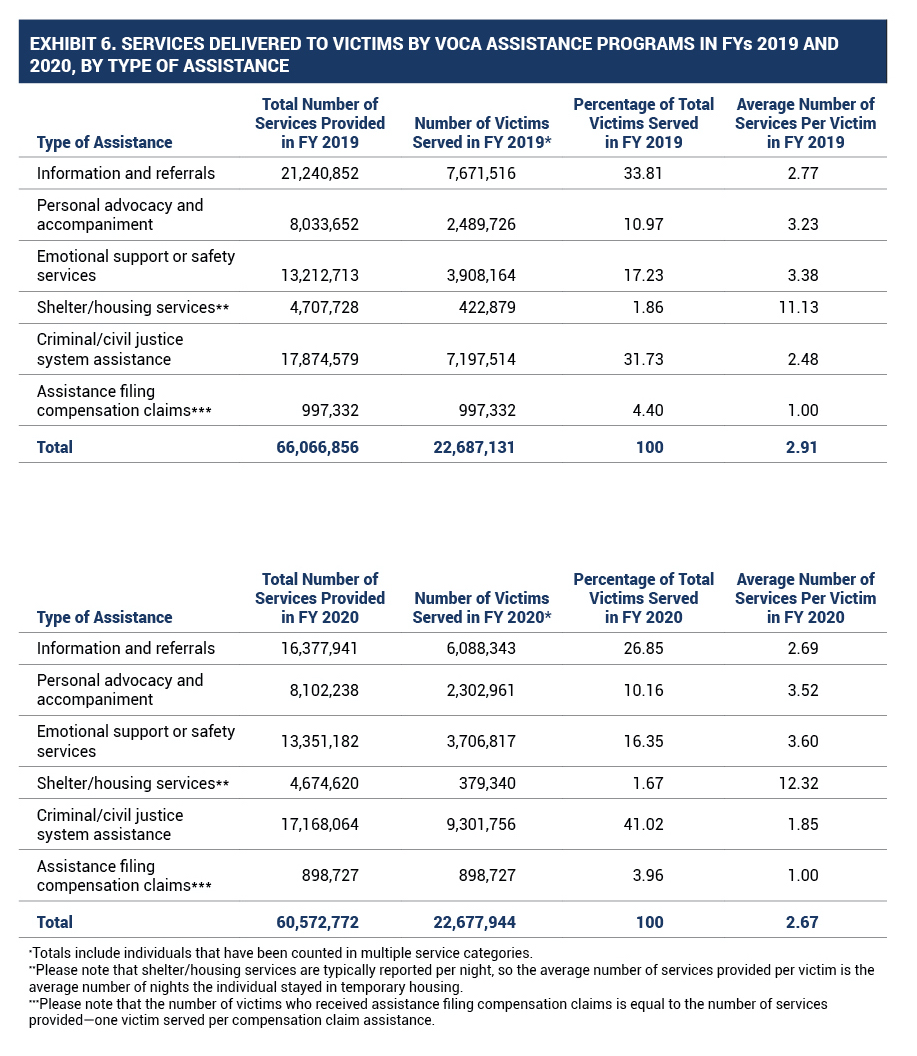
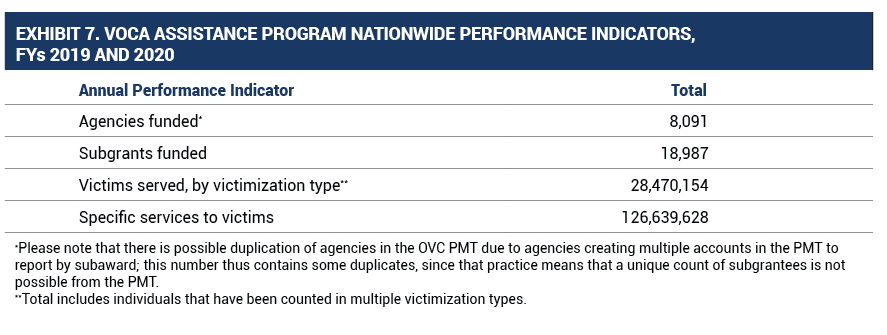
OVC’s VOCA Assistance Formula Grant Program supports thousands of victim assistance programs throughout the Nation annually. OVC’s funding of these programs—through subgrants to state agencies and local service providers—provides help for individuals, families, and communities recovering from both the immediate and prolonged effects of victimization.
VOCA assistance supports crisis counseling, telephone and onsite information and referrals, criminal justice support and advocacy, emergency...